 +91 9336121362


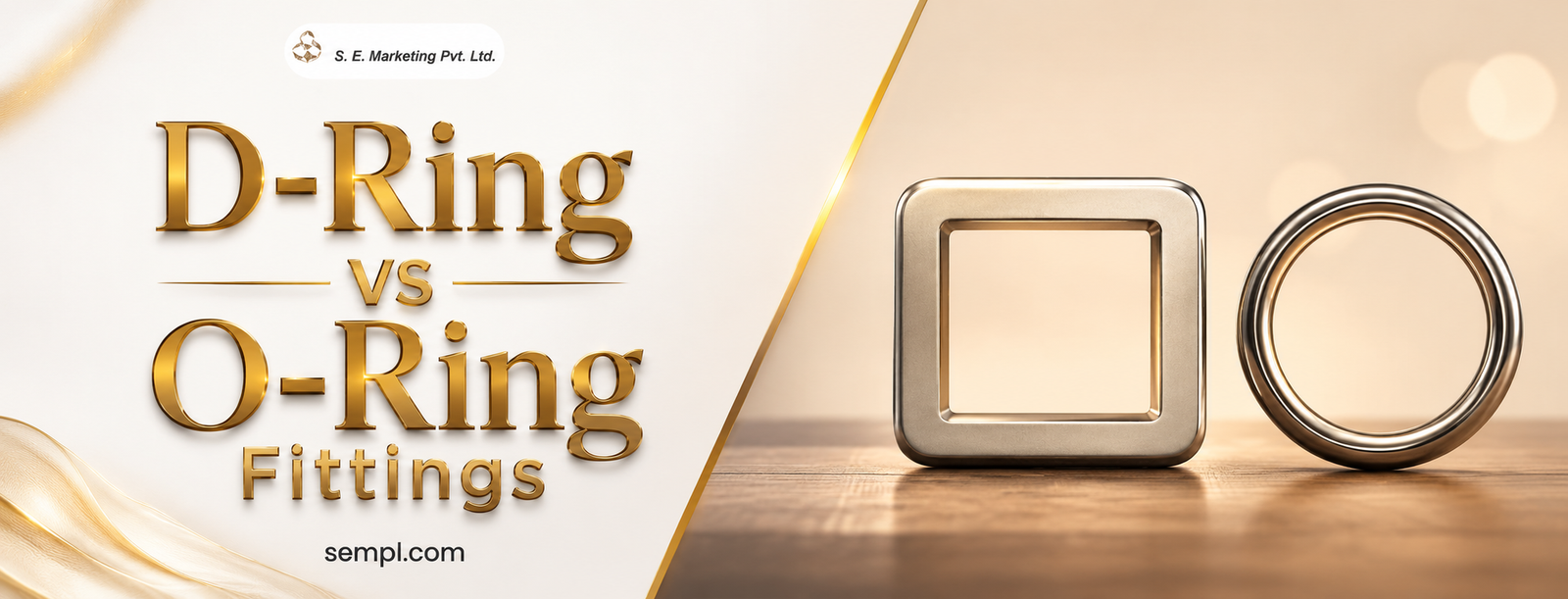
When designing bags, belts, pet accessories, fashion products, or industrial gear, choosing the right hardware is just as important as selecting the right material. Small components like rings and fittings may seem insignificant, but they directly influence the durability, functionality, and visual appeal of the finished product. Among the most commonly used hardware options are D-Ring vs O-Ring Fittings.
While both serve as connection points for straps, buckles, and accessories, they are designed for different purposes and perform differently under various conditions. Understanding their strengths, limitations, and ideal applications helps manufacturers, designers, and DIY creators make informed decisions that enhance both product performance and customer satisfaction.
Understanding D-Ring Fittings
A D-ring fitting is a metal or plastic ring shaped like the letter “D.” One side is straight, while the other forms a smooth curve. This unique shape provides a secure attachment point while preventing excessive strap movement.
D-rings are available in numerous sizes, finishes, and materials, including:
- Stainless steel
- Brass
- Zinc alloy
- Aluminum
- Plastic
- Powder-coated steel
They are commonly used in products requiring controlled strap positioning and improved load distribution.
Advantages of D-Ring Fittings
Some of the major benefits include:
- Excellent strap stability
- Reduced twisting during use
- Strong load-bearing capability
- Easy integration with buckles
- Professional appearance
- Suitable for heavy-duty applications
Because one edge remains flat, straps naturally sit in place, reducing unnecessary wear and movement.
Common Applications of D-Rings
D-ring fittings are widely used across industries because they provide secure attachment points while maintaining proper alignment.
Typical applications include:
Backpacks
Backpacks use D-rings for:
- Adjustable shoulder straps
- External gear attachment
- Compression systems
- Accessory loops
Handbags
Fashion bags often include D-rings for:
- Detachable shoulder straps
- Decorative accents
- Chain attachments
- Handle reinforcement
Tactical Equipment
Military and outdoor gear relies on D-rings for:
- Load-bearing straps
- Equipment attachment
- Safety harnesses
- Utility belts
Leather Belts
Many premium leather belts incorporate D-rings into minimalist buckle systems for improved adjustability.
Understanding O-Ring Fittings
An O-ring fitting is a perfectly circular ring designed to allow free movement in every direction. Unlike D-rings, there is no flat edge, giving the connected components complete rotational flexibility.
O-rings are manufactured using:
- Stainless steel
- Brass
- Iron
- Aluminum
- Plastic
- Zinc alloy
Their symmetrical shape makes them particularly useful when unrestricted movement is desired.
Advantages of O-Ring Fittings
O-rings from the top key ring fittings suppliers in Kanpur provide several functional and aesthetic benefits.
Key advantages include:
- Smooth 360-degree rotation
- Attractive modern appearance
- Balanced load distribution
- Ideal for decorative designs
- Versatile across multiple industries
- Comfortable movement for straps
Their circular profile also creates a sleek, premium finish that complements luxury products.
Common Applications of O-Rings
O-rings are frequently found in products requiring flexibility and decorative appeal.
Fashion Handbags
Luxury handbags often feature O-rings for:
- Chain connections
- Decorative handles
- Shoulder strap attachments
- Designer accents
Dog Collars and Leashes
Pet accessories use O-rings because they allow:
- Natural movement
- Secure leash attachment
- Reduced twisting
- Comfortable handling
Belts
Fashion belts use O-rings for:
- Statement buckles
- Adjustable closures
- Decorative styling
Clothing Accessories
Many garments include O-rings for:
- Suspenders
- Harnesses
- Fashion straps
- Decorative fastening
D-Ring vs O-Ring: Key Differences
Although both D-Ring vs O-Ring Fittings serve similar purposes, they differ in functionality, strength, and design.
| Feature | D-Ring | O-Ring |
| Shape | D-shaped | Circular |
| Strap Stability | Excellent | Moderate |
| Rotation | Limited | Full 360° |
| Heavy Load Support | Excellent | Good |
| Decorative Appeal | Moderate | Excellent |
| Strap Positioning | Controlled | Flexible |
| Common Industries | Industrial, tactical, luggage | Fashion, pet products, accessories |
| Cost | Similar | Similar |
Understanding these differences helps designers select hardware that matches the intended purpose.

Which One Is Better for Bag Design?
The answer depends on the type of bag being manufactured by the top Bag Fittings Manufacturer in Kanpur.
Choose D-Rings If Your Bag Needs:
- High strength
- Stable shoulder straps
- Outdoor durability
- Heavy carrying capacity
- Professional functionality
Ideal products include:
- Laptop bags
- Travel bags
- Hiking backpacks
- Tool bags
- Camera bags
- Messenger bags
The flat side of the D-ring helps prevent straps from sliding excessively, improving user comfort during prolonged carrying.
Choose O-Rings If Your Bag Needs:
- Stylish appearance
- Decorative hardware
- Rotating straps
- Fashion-forward aesthetics
- Lightweight construction
Perfect for:
- Luxury handbags
- Evening bags
- Mini bags
- Fashion purses
- Designer totes
Many premium fashion brands prefer O-rings because they contribute to a clean, symmetrical look.
Which One Works Better for Belt Design?
Belts serve both functional and fashion purposes, making hardware selection especially important.
D-Rings for Utility Belts
D-rings are ideal for:
- Work belts
- Military belts
- Outdoor equipment
- Industrial safety belts
- Tactical applications
Benefits include:
- Better weight support
- Secure fastening
- Minimal movement
- Improved durability
O-Rings for Fashion Belts
Fashion designers frequently use O-rings to create bold and contemporary belt styles.
These are especially suitable for:
- Women’s fashion belts
- Statement accessories
- Dresses
- Casual outfits
- Designer collections
The circular ring becomes part of the overall visual appeal rather than simply acting as a functional component.
Material Selection Matters Too
Whether selecting D-rings or S Rings, choosing the right material significantly impacts product performance.
Stainless Steel
Ideal for:
- Outdoor products
- Marine applications
- Heavy-duty bags
Benefits include:
- Rust resistance
- High strength
- Long lifespan
Brass
Best suited for:
- Premium leather goods
- Luxury handbags
- Designer belts
Advantages include:
- Elegant finish
- Corrosion resistance
- Timeless appearance
Zinc Alloy
Commonly used because it offers:
- Cost efficiency
- Attractive plating options
- Good durability
Aluminum
Excellent for:
- Lightweight backpacks
- Sports bags
- Travel accessories
Advantages:
- Lightweight
- Rust-resistant
- Modern appearance
Factors to Consider Before Choosing
Before deciding between D Rings and O-rings, evaluate several practical factors.
Product Function
Will the product carry heavy loads or primarily serve as a fashion accessory?
Weight Capacity
Heavy-duty applications generally benefit from D-rings due to their greater stability.
User Experience
Products requiring smooth movement often perform better with O-rings.
Design Style
Modern fashion collections frequently favour O-rings, while technical gear typically relies on D-rings.
Manufacturing Process
Consider:
- Stitching method
- Strap width
- Material compatibility
- Attachment hardware
Choosing compatible components ensures easier production and greater durability.
Can You Use Both Together?
Absolutely.
Many premium products combine both fittings to maximise functionality and aesthetics.
For example:
- A backpack may use D-rings for shoulder straps and O-rings for decorative accessories.
- A luxury handbag can feature D-rings for structural support and O-rings for handle accents.
- Tactical bags often incorporate D-rings for load-bearing points while adding O-rings for accessory attachment.
Using both hardware types strategically allows manufacturers to balance performance with visual appeal.
Maintenance Tips
To maximise hardware longevity:
- Clean metal fittings regularly.
- Avoid prolonged exposure to moisture unless corrosion-resistant materials are used.
- Inspect rings for bending or deformation.
- Replace damaged hardware immediately.
- Choose protective coatings for outdoor environments.
Proper maintenance extends product life while preserving its appearance.
Final Words
Selecting between D-Ring vs O-Ring Fittings ultimately depends on the intended purpose of your bag or belt design. D-rings offer superior stability, strength, and controlled strap positioning, making them ideal for backpacks, utility belts, travel gear, and industrial applications. O-rings, on the other hand, provide greater flexibility, smoother movement, and a stylish aesthetic that suits luxury handbags, fashion belts, pet accessories, and decorative designs.
By carefully considering factors such as load requirements, product style, material selection, and user experience, designers can choose hardware that enhances both performance and visual appeal. For premium-quality hardware solutions, precision-engineered fittings, and reliable manufacturing expertise, explore S.E. Marketing to find components that help bring durable, functional, and beautifully crafted products to life.
